Stalin's famous quotes: at the heart of Soviet power
of reading - words
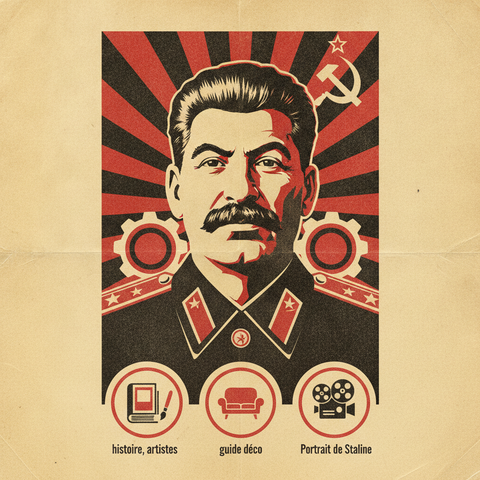
Joseph Stalin, one of the most influential leaders in modern history, left an indelible mark on the Soviet Union and the rest of the world. Known as much for his ruthless approach to power as for his political strategy, he is often remembered through his numerous quotes. Through these words, we can see a powerful insight into his thoughts and his manner of governing such a vast empire. These sentences still resonate in our minds as witnesses of an era marked by dictatorship and tragedy.
- 📜 “The death of one man is a tragedy. The death of millions is a statistic.”
- 🔍 “Ideas are much more powerful than weapons…”
- 📚 “Education is a weapon whose effect depends on who holds it…”
- ⚔️ “There is not and cannot be individual salvation…”
- 🥚 “You can’t make an omelette without breaking eggs.”
Iconic quotes: an introspection into Stalin's thought
Stalin was not only a master manipulator of the political scene, but also a linguistic strategist. Some of his quotes have spanned the decades, illustrating his unique perception of power. Take for example his famous statement: "The death of one man is a tragedy. The death of millions of people is a statistic." With this chilling sentence, Stalin highlights an impassive logic when it comes to human life in the face of large-scale political decisions.
Another quote speaks to the need to control the opposition and strengthen the stability of the state: "Ideas are much more powerful than weapons. We do not allow our enemies to have weapons, why should we allow them to have ideas?" This statement illustrates how Stalin perceived divergent ideas as a major problem for the sustainability of his authoritarian regime. This also demonstrates his strategic vision where even a simple thought could pose a threat if thwarted. If you would like to explore this historical icon further, check out the communist flag detailing Stalinist heritage.
Power and control of information
In the Soviet context, rigorous control of information was essential. Stalin fully understood the importance of shaping intellectual and emotional culture through media and the arts. To maintain this hold, he firmly applied his inflexible conception of power, expressed in sentences such as: "Education is a weapon whose effect depends on who holds it in his hands and at whom it is aimed." Thus, by manipulating educational and media flows, Stalin consolidated his influence over every aspect of Soviet life.
Its ability to transform society according to its ideologies necessarily required rigorous discipline regarding the dissemination of information. The means of expression were removed from any sign of independence which could incite a questioning of established authority. To commemorate this defining chapter in history, the "Stalin and Victory" napkin symbolizes this period of resolute leadership.
Dictatorship and fight against the opposition
At the center of Stalinist functioning was a power structure designed to eliminate any potential resistance. Stalin saw the opposition not only as an obstacle, but as an element to be eradicated to ensure supremacy.