The most popular books about Stalin
of reading - words
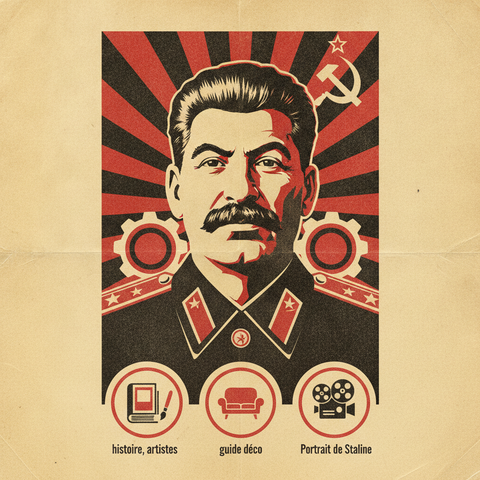
Joseph Stalin, an emblematic and controversial figure of the 20th century, has aroused curiosity and debate among historians and the general public. His years in power Soviet Union were marked by radical reforms, implacable dictatorship, and omnipresent terror. Fortunately for those who wish to delve into this complex universe, many authors have explored various aspects of his life and reign. In the following article, we will provide an overview of the most significant works available on this subject.
The rise to power: understanding Stalin through his biography
To better appreciate the complexity of Stalin, it is essential to turn to some detailed biographies. These books offer a fascinating insight into the mind of the leader, highlighting his meteoric rise through the mysteries of Soviet power. In the eyes of many researchers, understanding this pivotal period is essential to deciphering the system of rules which he instituted in the Soviet Union.
“Stalin: A New History” by Oleg Khlevniuk
Oleg Khlevnyuk, a renowned Russian historian, offers in his work “Stalin: A New History” a unique approach to the despot. Using recently declassified personal archives, Khlevniuk traces Stalin's journey from his beginnings to the pinnacle of power in a precise and captivating manner. The focus is on the systematic political repression he orchestrated, as well as the lasting impact of his authoritarian rule.
This book is considered one of the most complete and reliable references when it comes to studying the life of the Kremlin master. The author dissects not only his political decisions, but also his thoughts and motivations. This rigorous analysis makes the work of Khlevniuk essential for anyone seeking an informed biography of Stalin.
“Stalin” by Simon Sebag Montefiore
Simon Sebag Montefiore, known for its lively and engaging narrative style, also delves into the heart of Stalin's complexified personality. Through his work "Stalin", he not only recounts historical facts, but also explores the human aspect of the tyrant. It is a dense chronicle that highlights Stalin's personal interactions with those around him, his allies and enemies.
Montefiore draws on new evidence and exclusive interviews to illustrate how Stalin skillfully manipulated his environment. This book paints a nuanced picture, where each page reveals a little more the duality of the man who knew how to transform the Leninism into a ruthless machine of absolute power.
Fear Laboratory: Terrors under Stalin
One of the most terrifying periods of the Soviet Union undoubtedly remains that of the Great Purges orchestrated by Stalin. Terror and political repression were then commonplace. To fully understand the psychological and social impact of these events, certain works stand out as crucial references.
“The Great Terror” by Robert Conquest
Robert Conquest is often mentioned when discussing the documentation of Stalinist purges. His book "The Great Terror" takes a deep look at those bloody years, when millions of people suffered under the dictator's yoke. With an incisive look, Conquest scans the various operations carried out to maintain total control over the Soviet population.
This work brilliantly captures the oppressive atmosphere of the regime while providing a clinical account of the systematic elimination of perceived opponents. It allows us to perceive the extent to which the fear resulting from repressions shaped an entire generation of Soviet citizens.
“The Red Man” by Anne Applebaum
In "The Red Man", Anne Applebaum broadens the spectrum by connecting Stalinist practices across Soviet bloc countries. Although the book does not deal exclusively with Stalin, it nevertheless sheds light on the international ramifications of his dictatorship. The grip of terror is dissected through various anecdotes and direct testimonies.
Applebaum's meticulous research reveals how Stalinist terror was much more than a political tool; it had become a structural pillar of the existing socialist model. With a broad perspective, this book highlights the sinister influence of Leninist ideology revisited by Stalin.
Speaking of inhabiting a world influenced by powerful historical forces, why not add a touch of originality to your walls with a cultural element? Cinema: another facet of discovering Stalin
Alongside numerous books, Stalin continues to be a central character in cinema where his influence and legacy are often explored. Let's look at some notable films that helped visualize and animate the historical context of his reign.
"Stalin's Shadow"
“The Shadow of Stalin” is a drama film that examines the efforts of journalist Gareth Jones as he attempts to expose the devastating famine in Ukraine orchestrated by the Stalinist regime. The film well illustrates the fierce struggle against Soviet censorship and offers a poignant vision of the challenges posed by authoritarian control over information.
This production not only shows the pressure placed on the media at the time, but also gives a vivid image of the systemic horror hidden behind official facades. An instructive visual journey for those interested in this dark era.
“Child 44”
Although "Child 44" is more of a fictional thriller, it depicts the post-war Soviet Union under the crushing weight of Stalinism. Following the story of an officer tracking down a serial killer during the Cold War, the film shows how the state firmly controlled its citizens, even banning certain criminal investigations.
It does not necessarily offer factual truths about Stalin directly, but effectively sets the stifling and paranoid scene that defined post-Stalinist Soviet society. The moments of suspicion and the consequences of the regime's brutal policies stand out starkly.
Understanding the workings of a reign: in-depth analyzes
Beyond personal stories and biographies, several analytical works also offer a specific study on the mechanisms used by Stalin to establish his hegemony in the Soviet Union. These texts represent valuable instruments to satisfy the curious wishing to deepen their strategic knowledge of this era.
“Stalin and his Court” by Ronald Grigor Suny
Ronald Grigor Suny evokes in his book "Stalin and his Court" an internal vision of the political intrigues among those close to Stalin. This work reconsiders power dynamics through a range of new historical data, showing how Stalin's dominance rested on his ability to manipulate those around him.
Suny clarifies how these complex relationships helped maintain an interconnected network of authority that Stalin finely regulated. By adding additional layers of analysis, this book highlights the subtle influence that allowed him to maintain total control despite internal pressures.
“Stalinizm: Soviet Power and Crises of the Modernity” by Hiroaki Kuromiya
“Stalinizm: Soviet Power and Crises of the Modernity” by Hiroaki Kuromiya rounds out this eclectic list of essential reading. The usefulness of this work lies in its ability to historically associate Stalin's reign of terror with global transformations. This includes the process of Soviet industrial modernization that Stalin held so dear.
Kuromiya explains how these tensions between modernist ambitions and repressive methods fully characterize the legacy left by Joseph Stalin. Through concrete examples and relevant comparisons, he draws a striking illustration of the paradoxes inherent to the leader, making this book essential to better understand the implications of Stalinist choices on our contemporary world.
- 📚 "Stalin: A New History" by Oleg Khlevniuk - In-depth analysis on Stalin's rise to power.
- 🕵️♂️ “Stalin” by Simon Sebag Montefiore - Exploration of Stalin’s personal relationships and environmental manipulation.
- 🔍 "The Great Terror" by Robert Conquest - focus on the purges and terrors orchestrated by Stalin.
- 🌐 “The Red Man” by Anne Applebaum - International influence of the Stalinist regime.
- 🎥 Landmark films like “The Shadow of Stalin” and “Child 44” - cinematic visions of Stalinist realities.
- 📖 "Stalin and his Court" by Ronald Grigor Suny - Political-personal intrigues at Stalin's court.
- 🏗️ “Stalinizm: Soviet Power and Crises of the Modernity” by Hiroaki Kuromiya - Linking modern crises to Stalin’s regime.
| 📌 Appearance | 🔍 Recommended Book |
|---|---|
| Detailed biography | “Stalin: A New History” by Oleg Khlevniuk |
| Society under terror | “The Great Terror” by Robert Conquest |
| Cinema and representation of reality | "Stalin's Shadow" |
| Political intrigues and Stalin's court | “Stalin and his Court” by Ronald Grigor Suny |