The Meaning of the Raised Fist: A Symbol of Struggle
of reading - words
The raised fist is one of the most recognized political symbols in the world. A simple gesture with a powerful message: in an instant, it speaks of struggle, solidarity, and the refusal to stay silent. This article traces its history, from early depictions in antiquity to today's protest movements, and explains why its meaning still matters now.
Key takeaways
The raised fist is a symbol of struggle that cuts across movements, born in antiquity and popularized in the twentieth century. Before getting into the details, here are the main points to keep in mind.
- The raised fist has ancient roots, but it became a modern political emblem during the Russian Revolution of 1917.
- It was later carried by labor movements, anti-fascists, and then by Black Power and the civil rights struggle.
- Today, it accompanies feminist, environmental, social, and anti-racist causes.
- Its strength comes from its simplicity: one gesture, one image, one claim to collective dignity.
The historical origins of the raised fist
The clenched, raised fist appears long before modern politics took shape. Depictions of the gesture go back as far as antiquity, in cultures as different as the Assyrians and the Babylonians. The clenched fist already expressed strength, defiance toward the enemy, and the promise of victory. The gesture has endured through the centuries because it needs neither words nor a common language: it is understood everywhere.
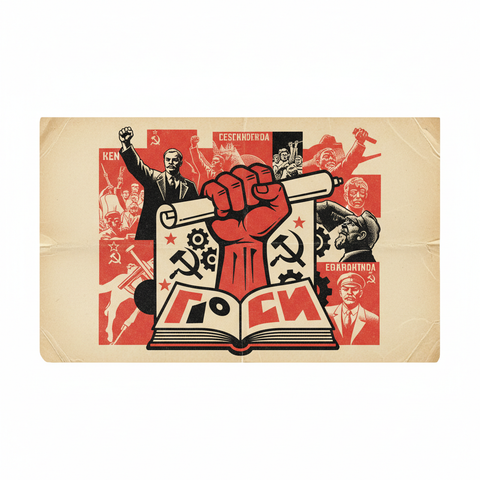
In the twentieth century, the raised fist took on an explicitly political dimension. During the Russian Revolution of 1917, it became a rallying sign among workers seeking social transformation. From that point on, the gesture moved beyond individual defiance to embody a collective force standing against oppression.
Its impact on the labor movement
In the 1930s, the raised fist became a fixture of European workers' protests. Through the interwar years, unions and left-wing organizations were looking for a visible sign that could spread quickly through a crowd. The raised fist met that need exactly and became a visual signature of social struggles.
Anti-fascist activists adopted it as well, especially during the Spanish Civil War. Raised against authoritarian regimes, the clenched fist came to embody resistance to the rise of the far right. That legacy lives on in today's activist culture, particularly on the politically charged communist t-shirts that put the gesture at the heart of their design.
At this stage, three clear uses stood out:
- Defiance against an authority seen as oppressive.
- Unity among workers, activists, and protesters.
- Visibility for a cause in the public sphere.
A powerful emblem during the civil rights movement
In the United States, the raised fist became the icon of Black Power in the 1960s. The African American civil rights movement was looking for a symbol that could bring together pride, dignity, and the demand for equality. The clenched fist filled that role. It carried both the memory of past struggles and the urgency of the present fight.
The most striking image remains the 1968 Olympic Games in Mexico City. On the 200-meter podium, Tommie Smith and John Carlos raised their black-gloved fists during the American national anthem. Broadcast around the world, the image anchored the raised fist in collective memory as an act of protest against racial segregation.
From Black Power to feminist movements
The raised fist quickly moved beyond the civil rights movement and into feminist circles. From the 1970s on, women's liberation movements adopted it, sometimes combining it with the symbol of Venus. The message was clear: women's struggle is part of the broader fight for social justice. Today, the feminist raised fist still appears at International Women's Day marches around the world.
In these contemporary movements, the gesture mainly serves to:
- signal collective belonging without a long speech;
- make political anger visible in a crowd or an image;
- connect several causes around a shared idea of resistance.
Summary table of the raised fist's main uses
To see the symbol's evolution at a glance, here are the main periods and movements tied to it.
| Period | Movement | Dominant meaning |
|---|---|---|
| Antiquity | Assyrian and Babylonian cultures | Strength, defiance toward the enemy |
| 1917 | Russian Revolution | Workers' solidarity, political protest |
| 1930s | Labor and anti-fascist movements | Union unity, resistance to authoritarianism |
| 1968 | Black Power, civil rights | Black pride, fight against segregation |
| 1970 to today | Feminism, ecology, anti-racism | Social justice, collective dignity |
Why the symbol still matters today
Far from being a relic of the past, the raised fist remains a living sign in today's protests. Social inequalities, climate anxieties, and the fight against discrimination have given the gesture a second life. Feminist marches, climate rallies, anti-racist protests: the clenched fist shows up wherever people come together to defend their rights.
With social media, the symbol has also gained a digital life. The raised fist emoji is used every day to express support, commitment, or solidarity in the face of injustice. That dual presence, in the streets and online, extends its relevance and gives it instant global reach.
What explains its staying power:
- a gesture that reads instantly, even without a slogan;
- a strong emotional charge, somewhere between anger and hope;
- wide adaptability, from labor struggles to today's protests.
Criticism and commercial co-optation
The symbol's success also makes it vulnerable to commercial co-optation. Some brands slap it on merchandise that carries no real political message. That trend draws criticism: for many activists, the raised fist only makes sense when it is paired with concrete commitment in everyday struggles. Standing out in an image-saturated environment has become a challenge in itself.
Why raise a fist today?
Raising a fist is a public way of saying you refuse to bow down. In a world where economic and social gaps keep widening, the gesture reminds us that a collective force is ready to defend equality and dignity. It does not belong to any single side or cause: it belongs to everyone who chooses not to give up.
The raised fist is not an end in itself but a starting point for commitment. Carrying it on a sign, a t-shirt, in a photo, or on social media means joining a long tradition of struggle waged by those who refused injustice. To learn more, explore the full selection at the Communist Universe store.
FAQ: everything you need to know about the meaning of the raised fist
What does the raised fist really mean?
The raised fist is a universal symbol of struggle, solidarity, and resistance. It expresses collective strength in the face of injustice, whether political, social, or racial. Its meaning shifts with the movements that carry it, but it always keeps that core sense of refusing oppression.
Where does the raised fist come from?
The gesture goes back to antiquity, with depictions among the Assyrians and the Babylonians. Its modern political weight emerged in the early twentieth century, during the Russian Revolution of 1917, before being adopted by European labor movements.
Why did Tommie Smith and John Carlos raise their fists in 1968?
On the podium at the Mexico City Olympic Games, the two African American athletes raised their black-gloved fists to denounce racial segregation in the United States. Broadcast worldwide, the gesture became one of the most iconic images of the twentieth century.
Is the raised fist an exclusively communist symbol?
No. While it is historically tied to twentieth-century labor and communist movements, it has been taken up by feminist, anti-racist, anti-fascist, and environmental causes. Above all, it stands for collective resistance against every form of oppression.
How can the raised fist be carried in daily life?
Many activists wear it on a t-shirt or patch, or display it on a sticker or flag. The raised fist can also accompany a slogan or a demand, in the streets or on social media. It serves as a sign of recognition between people involved in similar struggles.