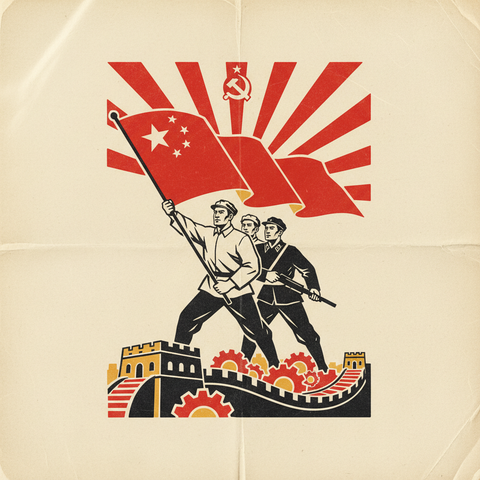
Iconic books on communism
of reading - words
Communism, as a major political and social ideology of the 20th century, has inspired a rich literature and numerous films. Whether historical stories or fiction exploring life under this regime, there are many works on the subject. Let's explore some of the books and films that tackle the theme of communism, each offering a unique perspective on this ideology that promised a world without classes but often marked by terror and repression.
Essential literature on communism
Communist Party Manifesto: the essence of ideology
Written by Karl Marx and Friedrich Engels in 1848, the Communist Party Manifesto remains one of the founding texts of the communist ideology. This book offers an analysis of the history of communism, affirming that it is marked by class struggle. The authors also present their vision of a society where private property would be abolished in favor of a classless community.
This work, although old, remains relevant for understanding the theoretical bases of communism and its desire to overthrow the established order to establish total equality. It highlights the opposition between proletarians and bourgeois, the engine of social change according to Marx and Engels.
The Black Book of Communism: Inventory of Crimes
Published in 1997, The Black Book of Communism is a work that documents human rights violations committed under various communist regimes. This collective work details the murders, deportations and other brutal forms of repression that accompanied the implementation of communist ideology in countries such as the USSR and China.
The authors estimate the number of victims of communism in the 20th century to be around one hundred million. They analyze how promises of equality and social justice have often been tainted by terror and totalitarianism. This book is essential for those seeking to understand the concrete consequences of this historical ideology.
Gulag Archipelago: testimony to the Soviet prison system
Alexander Solzhenitsyn's monumental work, Gulag Archipelago, describes the Soviet penal system in great detail. Published clandestinely in 1973, this book offers an autobiographical account of the years spent by Solzhenitsyn in the Gulag labor camps. It reports on the inhumane conditions and institutional violence imposed by the Soviet Union regime.
Through his story, Solzhenitsyn not only condemns the horrors experienced under Soviet communism, but also foresees a broader critique of modern totalitarianism. This book highlights the hypocrisy of regimes which, while advocating equality, have not hesitated to crush any form of dissent.
The origin of totalitarian systems: analysis of repression
Hannah Arendt explores in The Origins of Totalitarianism the mechanisms by which systems such as Nazism and Stalinism seized power. Although this work is not exclusively devoted to communism, it carefully examines the common characteristics that define these repressive regimes.
Arendt demonstrates that the movement towards totalitarianism is based on the systematic use of terror. This raises an important reflection on the possible excesses of a political ideology when it is misused in the service of absolute control.
Iconic films centered on communism
The Lives of Others: state surveillance in the GDR
The Lives of Others, directed by Florian Henckel von Donnersmarck, paints a chilling portrait of the surveillance practiced by the secret police of