Communism and fascism: two antagonistic ideologies
of reading - words
Communism and fascism represent two of the most powerful ideological forces of the 20th century. While one seeks to establish a classless society, the other advocates extreme nationalism. These political systems have left an indelible mark on history by generating totalitarian regimes that are distinct but comparable in several aspects. This article proposes to delve into these two radically different conceptions of political and social power.
Origins and ideological foundations
To understand the differences between communism and fascism, it is essential to look at their origins. Communism, derived from the writings of Karl Marx and Friedrich Engels in the 19th century, envisions a world where private property would be abolished in favor of a pooling of the means of production. The goal? Eliminate social inequalities to achieve a harmonious and egalitarian society. Today, we highlight this deeply human ideology through our communist boutique.
In contrast, fascism emerged in 1920s Italy under the leadership of Benito Mussolini. This ideology is based on extreme nationalism and a rejection of democratic values. Unlike communism, which values internationalism, fascism glorifies national and ethnic superiority. It is an authoritarian ideology that glorifies the State and subordinates the individual to its will.
Summary table of key ideas
| Ideology | Communism | Fascism |
|---|---|---|
| Objective | Classless society | Powerful authoritarian state |
| Private property | Deleted | Preserved but controlled by the State |
| Initial values | Internationalism | Nationalism |
| Relationship with democracy | Anti-democratic | Anti-democratic |
Practical implementation and political regimes
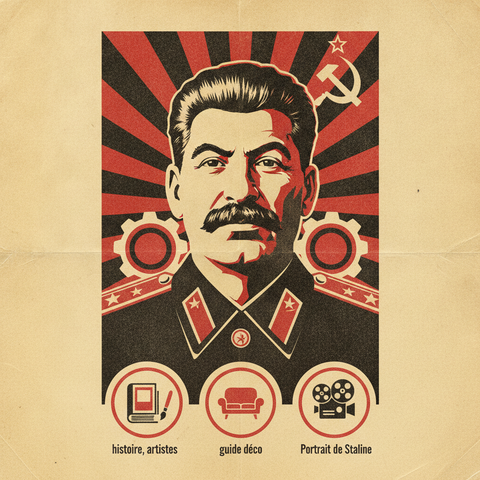
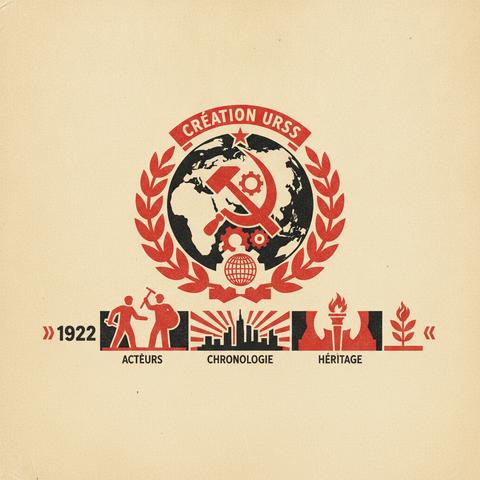
Communism reached its most successful form with the creation of the Union of Soviet Socialist Republics (USSR) in 1922. Under the leadership of figures such as Vladimir Lenin and Joseph Stalin, the USSR experimented with communism until its collapse in 1991. This regime was characterized by tight state control over all aspects of life, including the economy, culture and politics, detriment of individual freedoms.
For its part, the fascist regime found its most brutal expression with Nazism in Germany under Adolf Hitler. Although it shares some characteristics with Italian fascism, Nazism is notable for its institutionalized racism and virulent anti-Semitism. Through intensive propaganda and a sprawling repressive apparatus, these totalitarian regimes have stifled all dissent and imposed a single way of thinking.
Diets Comparison: Similarities and Differences
- Authoritarianism: Both systems are inherently authoritarian, rejecting the fundamental principles of liberal democracy.
- Propaganda: Each regime has used propaganda to strengthen its legitimacy and control public opinion, although the themes addressed differ (class struggle for communism, racial purity for fascism).
- Social control: A common currency in communist and fascist totalitarian regimes is the rigorous control of society by the state.
- Repression: All forms of protest or political opposition were violently repressed.