Who is Mao Zedong: A look at the Chinese statesman
of reading - words
Mao Zedong is a central figure in modern Chinese history. Statesman, military leader and influential ideologue, he marked his time by leading the Chinese Communist Party (CCP) towards victory in the civil war against the nationalists. His role in the creation of People's Republic of China in 1949 remains a subject of study for anyone interested in the Chinese Revolution and its significant impact.
The beginnings of Mao Zedong: from the countryside to politics
Born on December 26, 1893 into a peasant family, Mao Zedong grew up on farmland in Hunan province. From his youth, he showed a pronounced interest in literature and self-taught learning, despite modest living conditions. After high school, Mao embraced the emerging political ideas of the time that challenged the traditional imperial system.
It was during his student years in Changsha that Mao discovered the Marxism-Leninism, immersing himself in passionate readings of the writings of Karl Marx. This discovery gradually guided his political commitment. In Beijing, where he worked briefly at the university as an assistant librarian, he continued to frequent progressive and Marxist circles, enriching his radical and critical thinking.
Joining the Chinese Communist Party
Influenced by these new ideas, Mao joined the Chinese Communist Party shortly after its founding in 1921. From the outset active in recruitment and mobilization, it played a key role in promoting Marxist ideals among Chinese workers and peasants. Its strategy is based on a detailed analysis of the causes of rural poverty, thus laying the foundations of essential support for farmers.
Over the years, he climbed the ranks within the CCP thanks to his charisma and innovative tactics. Mao quickly became a central player, actively participating in internal debates about the country's future in the face of foreign influences and growing popular revolts.
Conflicts and struggles: the rise of the Communist Party and Mao
In the 1930s, China's political situation was emblematic of deep-rooted divisions. The country is torn between nationalists and communists, each seeking to define the new post-imperial direction. Mao played a decisive role in the struggle for hegemony within this complex dynamic, embodying a revolutionary sobriety that still inspires our communist jacket collection.
There Long Walk (1934-1935) constitutes a decisive turning point. During this grueling journey, Mao emerged as the undisputed leader of the CCP. Despite the harsh circumstances, he managed to maintain the cohesion of the command and to galvanize his troops. This legendary moment sharpens its public image and affirms its ability to resist against all odds.
The Sino-Japanese War and temporary alliances
During the Second Sino-Japanese War (1937-1945), Mao demonstrated strategic pragmatism by forming a temporary alliance with the Nationalist Movement led by Chiang Kai-shek to counter the Japanese invader. This front unit allows the CCP to strengthen its military positions while establishing essential rural bases for future wars.
However, this cooperation is not free of tensions and possible betrayals. Relations between nationalists and communists remain fragile, tinged with persistent distrust. Nevertheless, this period sets the stage for the inevitable future confrontation between the two rival factions.
The Civil War and the rise of the People's Republic of China
With the end of the World War, the confrontation resumes between nationalists and communists. There civil war (1946-1949) thus represents a brutal and decisive chapter in the quest for national domination. Thanks to considerable popular support, particularly among rural populations, Mao led his Red Army to victory.
The capture of Beijing by communist forces in January 1949 signaled the imminent fall of the Nationalist government. On October 1, 1949, Mao proclaimed the birth of People's Republic of China during a symbolic declaration made from the Tiananmen Gate in Beijing. This event marks not only a change of regime but also a profound cultural transition.
Mao Zedong: builder of a communist regime
From this point on, Mao focused his efforts on establishing a communist state. He undertook ambitious social and economic reforms aimed at radically transforming society. L'revolutionary legacy of Mao Zedong, symbolized by iconic objects such as the red flag displaying his portrait, perfectly illustrates this era of profound changes. Agricultural collectivization, rapid industrialization and educational programs were implemented on a large scale to eradicate the old feudal structure and promote the emergence of an egalitarian society.
However, these reforms are not going smoothly. Harsh purge campaigns target those perceived as enemies of the revolution, leading to periods of political terror. The humanitarian and social impact of certain plans, such as the "Great Leap Forward", sometimes results in serious crises, including disastrous famines.
Mao's iconic status and enduring influence
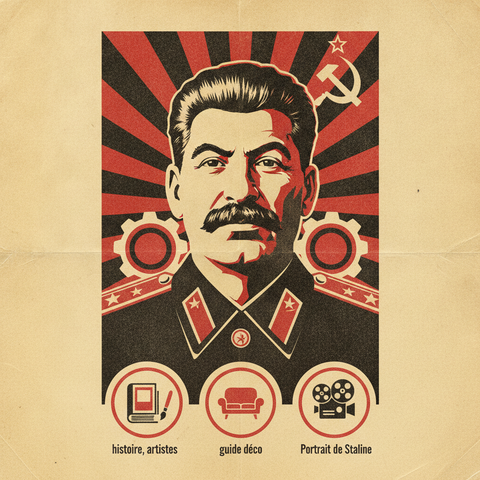
Despite the controversies and suffering associated with some of his policies, Mao remains a revered figure for many, seen as the symbol of Chinese reunification and resistance against Western imperialism. His omnipresent portrait throughout China still testifies to his historical and cultural importance.
Internationally, Mao Zedong has continued to fascinate political analysts and historians examining the particular evolution of Maoist socialism compared to other world communist currents. Without a doubt, his unique vision shaped not only a country, but also an imperishable geopolitical imagination.
The controversial legacy of Maoist ideology
THE Maoism rests on several distinct philosophical pillars, including the belief in the collective momentum capable of transcending structural obstacles. However, this model has inherent contradictions regarding its practical applications in an often unforgiving reality. For those who wish to express their admiration for this unique heritage, the red communist flag representative of Mao Zedong can be a tangible way of connecting with this story.
Many people criticize this legacy, highlighting the authoritarian excesses and tragic consequences linked to major programmatic errors. Furthermore, the paradoxical combination of aspired modernity and unaltered traditions perpetuates complex identity dilemmas within the current regime, now engaged on innovative reformist paths.
Mao and the Cultural Revolution: shadow or light?
Perhaps one of the most troubling phases of his reign was the Cultural revolution (1966-1976). Initiated by Mao himself, it aims to revitalize the revolutionary spirit considered dormant. However, this initiative is accompanied by massive abuses carried out by the Red Guard, affecting millions of Chinese across the country.
Paradoxically, while this period caused economic chaos and complete social destabilization, it also marked an artistic and intellectual awakening. Many intellectuals and artists are pushed to express their dissent by subtle means, unwittingly contributing to a plural cultural renaissance under authoritarian pressure.
Localized and global impact
Internally, the Cultural Revolution disrupted existing social structures. Physical and private assets become sources of conflict, while each institutional actor is subjected to brutal questioning in order to eliminate stubborn established elites.
On the other hand, this era exerts a disruptive influence beyond national borders. It inspires various Third World activist movements seeking to compete with Western capitalist models. Often misunderstood, Maoism is a school, nevertheless stimulating various reflections and reinterpretations among its international followers.
Consequently, the figure of Mao must be considered through the nuanced prism of the multiple centrifugal forces which brought about the radical socio-political metamorphosis of the 20th century, and whose essence undeniably continues to resonate even today, lastingly complexifying the inextinguishable legacy left behind him.